
The ACCA Financial Reporting (FR) exam is a 3-hour computer-based exam worth 100 marks, with a pass mark of 50%. All questions are compulsory. Section A has 15 objective test questions (30 marks), Section B has 3 case-based questions of 5 objective test questions each (30 marks), and Section C has 2 constructed response questions of 20 marks each (40 marks).
Before you start preparing for Financial Reporting, understand the examination you are preparing for.
Contents
Before you start studying accounting standards, there is one important question you should answer: Do you understand the examination you are preparing for?
FR is not simply an examination where you write answers on paper and show your calculations. It is a computer-based examination (CBE), and you need to be comfortable applying your accounting knowledge within that environment.
FR is a computer-based examination
The ACCA FR exam is three hours long, carries 100 marks and has a pass mark of 50%. All questions are compulsory. The exam has three sections: A, B and C.
| Section | Question format | Marks |
|---|---|---|
| A | 15 objective test questions, worth 2 marks each | 30 |
| B | 3 case-based questions, each containing 5 objective test questions worth 2 marks each | 30 |
| C | 2 constructed response questions, worth 20 marks each | 40 |
| Total | All questions are compulsory | 100 |
What do the three sections test?
Section A: Objective test questions
These questions can test any area of the syllabus. They may involve calculations, accounting treatments or conceptual understanding. They are not necessarily limited to traditional multiple-choice questions. You need to understand accounting principles and apply them accurately.
Section B: Case-based questions
Each case presents a scenario followed by five objective test questions. You may need to interpret information, perform calculations or apply accounting principles to the situation described. Practising individual topics is important, but you must also learn to apply your knowledge to information presented within a scenario.
Section C: Constructed response questions
This section carries 40% of the total marks and requires you to develop answers rather than simply select an option. The questions cover financial statement preparation and financial statement analysis and interpretation, involving either individual entities or groups. You may need to prepare financial statement extracts, calculate figures, explain accounting treatments or interpret financial performance.
Why does the computer-based format matter?
In Section C, you use the word-processing and spreadsheet tools available within the examination system to prepare answers and workings. Knowing the accounting treatment is only part of the requirement. You also need to organise calculations and present your workings clearly in the digital environment.
Should you practise using Excel?
Yes. Excel is an excellent tool for learning and revising FR calculations. It can help you organise workings, understand the effect of adjustments and check calculations. At Skilledgrad, we introduce students to Excel during their learning process so they can use it to understand and practise accounting calculations.
However, practising in your usual Excel application is not the same as practising in the ACCA exam environment. Use Excel to strengthen your understanding, but also practise on the ACCA Practice Platform so that you become familiar with the examination interface and its available spreadsheet and word-processing functionality.
Understand the exam before you start preparing
Knowing the format should influence how you prepare for FR. You need broad syllabus knowledge for Sections A and B, the ability to prepare and interpret financial statements for Section C, and practice answering questions under time constraints.
The official ACCA specimen exam is useful for understanding question styles and the examination environment. Do not leave these resources until the final few days. Familiarity with the examination should develop alongside your technical knowledge.
What comes next?
Understanding the exam format is your starting point. The next step is to prepare systematically. This four-part series covers the complete preparation journey:
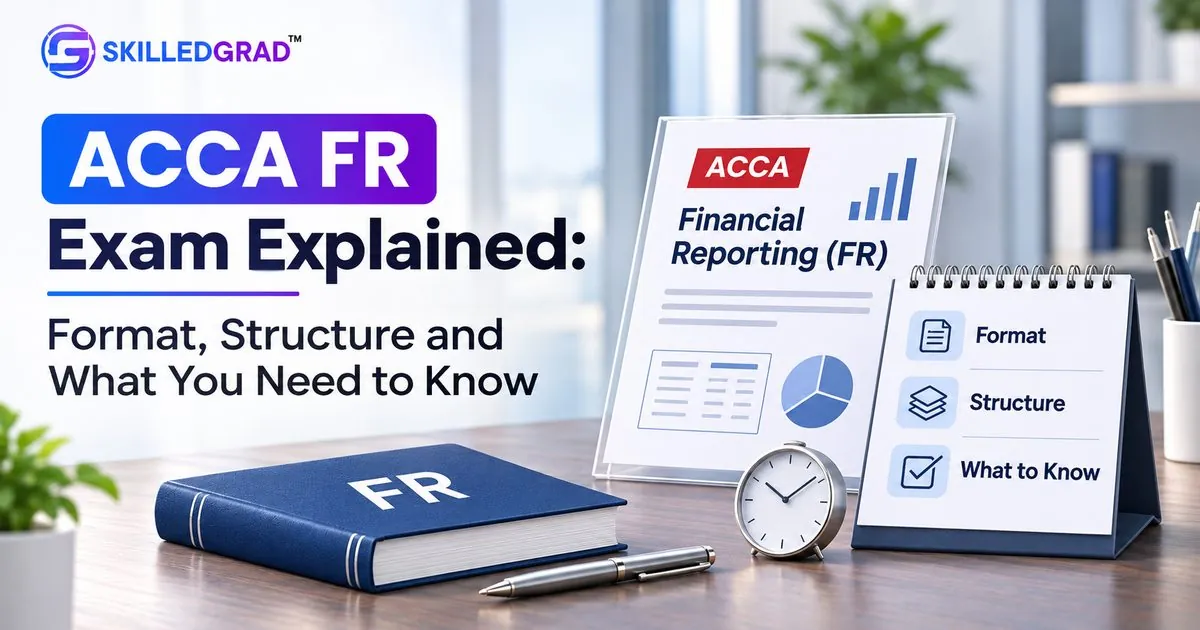
Part 1: Understand the FR exam: format, question types and the computer-based examination environment.
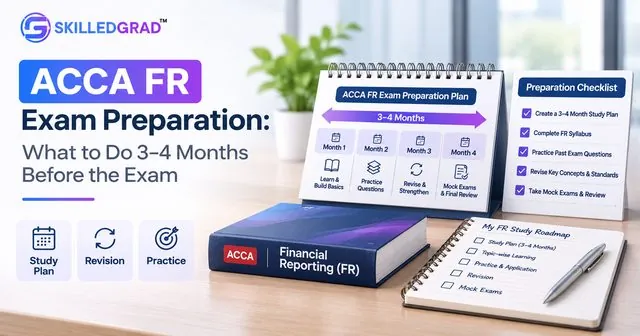
Part 2: Before starting FR: what to do three to four months before the exam.
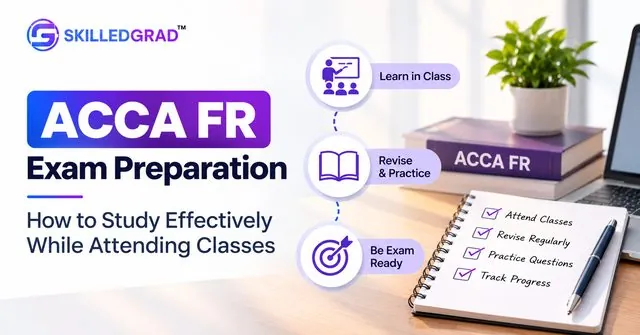
Part 3: While attending classes: how to learn effectively, use the ACCA Study Hub and reinforce your understanding with Excel.
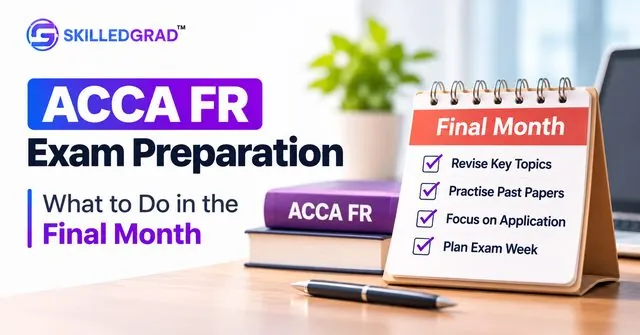
Part 4: One month before the exam: revision, the ACCA Practice Platform, pre-mocks, specimen exams and final preparation.
Understand the exam. Prepare with a plan. Practise consistently. Enter the examination ready to apply what you have learnt.
Official ACCA resources:
Prepare with Skilledgrad
Classroom coaching at Purasaiwakkam and Tambaram, with structured classes, question practice, tests and one-on-one mentoring. Talk to us about the batch and exam window that suit you.